Wildlife
Rabbit Control
Rabbit activity can damage planting and undermine usable ground. Discuss a site-specific assessment for gardens, grounds and commercial land, including practical prevention where appropriate.
Bromley · South London · Kent & the South East

 Rabbit Control
Common signs
- Repeated grazing damage to young planting
- Burrows or soil disturbance in managed grounds
- Regular activity affecting a defined part of a site
Understand the extent and boundaries
An assessment considers the area affected, neighbouring access and the way the land is used. Tell us about the planting or ground at risk, the site boundaries and whether activity has changed recently. Photographs of damage can be useful, but should not involve approaching burrows or disturbing animals.
Consider prevention alongside control
The suitability of exclusion and other measures depends on the boundary, ground conditions and other wildlife using the site. Any proposed control must be assessed for the specific circumstances.
Plan the work around the people using the land
Gardens, managed landscapes and commercial grounds need clear access arrangements. Discuss pets, public access, livestock and working hours before a visit. Ask what monitoring or follow-up is included and whether fencing, landscape repair or planting replacement needs a separate contractor.
Signs of a rabbit problem
Rabbits are most active around dawn and dusk, so the damage is often found before the animals are seen. Look for small, round, dark droppings, often left in clumps or on raised spots; grazed lawns and shoots cut cleanly at an angle; gnawed bark at the base of young trees and shrubs; shallow scrapes in turf; and burrow entrances, usually in banks or under hedges, sheds and tree roots. On larger sites, worn runs through long grass and gaps under fences show where rabbits are getting in.
Rabbits and the law
Under the Pests Act 1954, mainland England and Wales, apart from the City of London, the Isles of Scilly and Skokholm Island, is a rabbit clearance area. Occupiers of land have a legal duty to control wild rabbits living on it and can be required to take action where rabbits damage neighbouring land. At the same time, the Wild Mammals (Protection) Act 1996 and the Wildlife and Countryside Act 1981 protect wild rabbits from cruelty and restrict the methods that can be used. Any control we propose has to be lawful and humane for the site in question.
Why numbers rise quickly
Rabbits breed from early in the year through the summer. A doe can have several litters a year, each after a pregnancy of about a month, and young rabbits can breed within a few months of birth. A handful of rabbits in spring can become a much larger group by autumn. That is why it helps to describe activity early, and to deal with the reasons rabbits are using the site as well as the animals seen today.
Gardens, grounds and commercial land
Gardens, golf courses, sports pitches, school grounds, hotels, transport sites and farmland all see rabbit problems. Burrows can create trip hazards on playing surfaces and paths, grazing spoils planting and new hedging, and gnawing can kill young trees. For commercial and managed sites, tell us who uses the land and when, and whether livestock, pets or the public have access, so the work can be planned safely. Rabbit-proof fencing can be discussed as part of prevention, with its specification agreed separately.
What happens when you contact us
Tell us what you have seen
Call or email with your postcode and where you have seen signs of pests. You do not need to know which pest it is.
Inspection and treatment
We check for signs of activity and possible entry points, then explain the recommended treatment and price before work begins.
Preventing a return
We explain any follow-up and how to reduce the risk of pests returning. Proofing or cleaning, if needed, is priced separately in the quote.
Rabbit Control: common questions
Can you help with damage in a garden?
Enquire with the location and extent of the damage. An assessment determines which options are appropriate.
Does control include fencing?
Not automatically. Prevention works and their specifications should be agreed separately.
Will you move rabbits elsewhere?
Do not assume relocation is an available or suitable option. The lawful and appropriate approach depends on the circumstances.
What are the signs of a rabbit problem?
Round, dark droppings in clumps, grazed lawns and young shoots, gnawed bark at the base of trees, scrapes and burrow entrances, and gaps under fences where rabbits get in.
Is rabbit control legal in the UK?
Yes. Occupiers of land in England and Wales have a duty under the Pests Act 1954 to control wild rabbits on their land, and the methods used must be lawful and humane under wildlife welfare law.
How quickly do rabbits breed?
Quickly. A doe can have several litters a year, each after a pregnancy of about a month, so a small group can grow considerably over one season.
What if the rabbit on my site is a pet?
Domestic rabbits are often brightly coloured or patterned and less wary of people. An escaped or abandoned pet is a welfare matter, not pest control: contact a local animal rescue centre, which may be able to collect it or trace the owner.
Related services
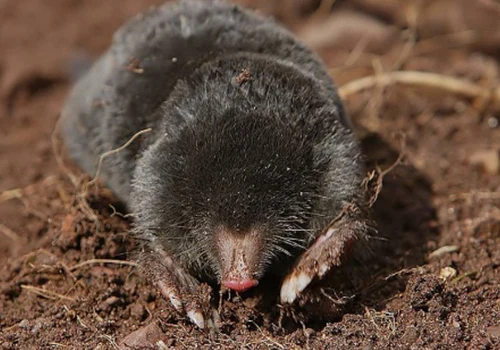
Mole Control
Fresh molehills and disturbed ground can make lawns and managed outdoor areas difficult to use. Arrange an assessment of the active runs and the setting before choosing a control approach.
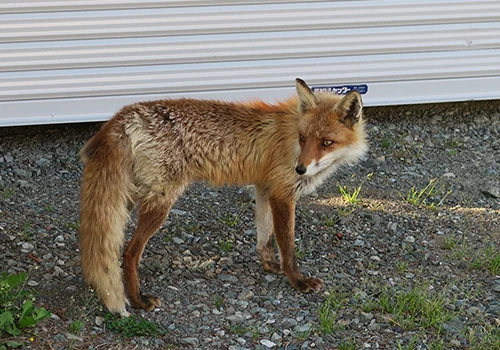
Fox Management
Foxes visiting a garden do not always require control. Where repeated activity is affecting a property, begin with an assessment of food, shelter, access and the practical options available.

Commercial Pest Control
Commercial pest control for shops, offices, restaurants, warehouses and managed buildings in Bromley, London and Kent: one-off visits or ongoing pest control.
Rabbit Control in Bromley, South London and Kent
Bromley and Orpington, South and South East London, Kent and selected areas of Sussex. Give us your postcode to check availability.
All areas we coverNeed help with pests?
Call or email with your postcode and what you have noticed.